
UAVs USE CASES UNDER DEVELOPMENT
DRONES AI & Computer Vision
The integration of AI-assisted computer vision and guidance into UAV technology is driving a monumental shift in autonomous capabilities.
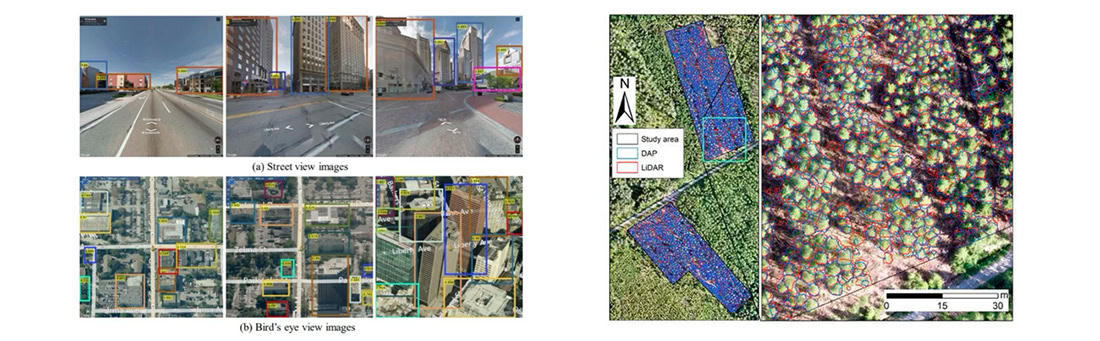
Lidar and photogrammetry interfaced with machine-learning capable, embedded systems are giving UAV’s the ability to interpret and interact with their environments with rapidly improving levels of precision.
The AI machine-vision revolution has now attained a fully geo-political imperative with the drivers for development having gone well beyond just the economics. All indications are that it will go from strength to strength and that increasingly large resources will be deployed to realise the full capabilities of the underlying machine vision and ancillary technologies.
The application of UAV’s to increasingly sophisticated physical and interactive tasks is becoming possible using the same underlying computer vision and processing technologies. Several practical applications are already in early-stage commercial operation, with many more currently under development worldwide.
Drones With Tools
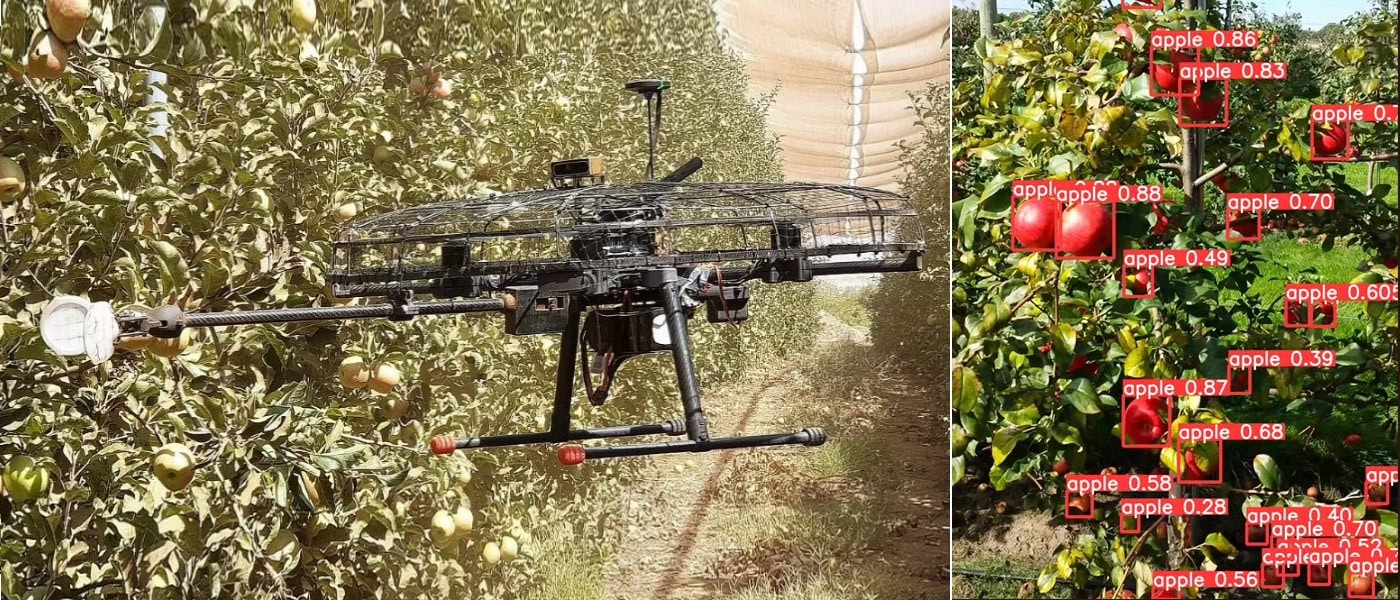
Machine-vision embedded systems are making possible the use of UAV’s, to accomplish an increasingly wide range of agricultural tasks such as commercial tree pruning and fruit harvesting.
Onboard computer analysis of machine-vision camera data allows for the identification of fruit and vegetable types along with ripeness and weight. Embedded onboard computer systems interfaced with servo tools are now performing practical, economic, and agricultural operations. Intelligent harvesting and sequestration of fruit and vegetable types is being accomplished using the same underlying UAV-based machine-vision-powered robotic systems.
Commercial Forestry Pruning
UAV vision and tool use capability is presently being developed for autonomous pine forest branch pruning operations.
AI-assisted machine vision analysis of real-time photogrammetry data is interfaced with embedded systems to fully automate flight over a selected area as well as to automatically perform tree and branch selection along with cutting operations. Servo-operated claspers, combined with either shear or saw equipment are then used to make an automated cut.
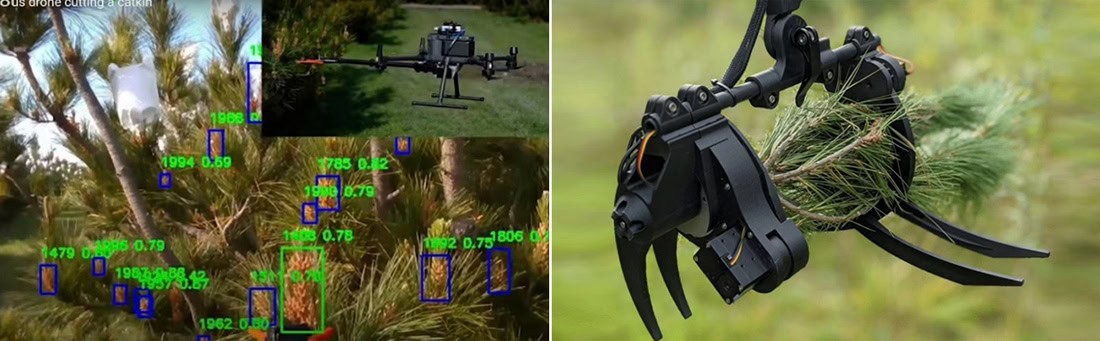
Successful testing has demonstrated the technical feasibility of automated commercial tree pruning using UAV’s. Considering the size of forestry operations worldwide, combined with increasing labour shortages, the commercial scope of a practical UAV tree-pruning solution would be immense.
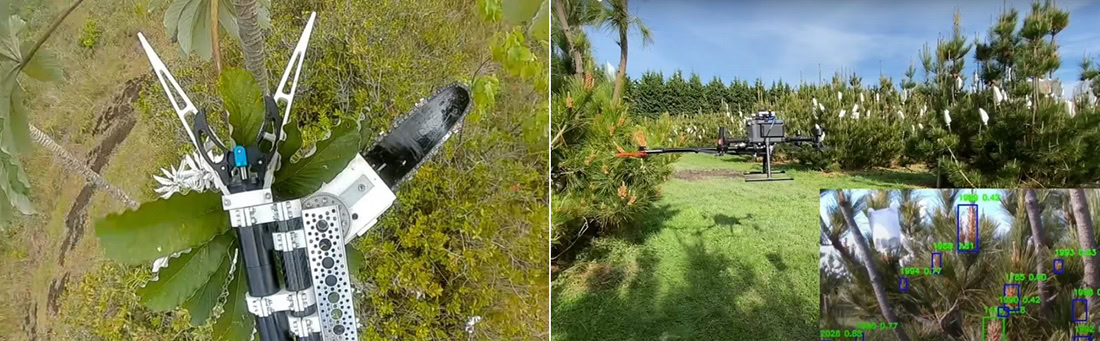
Due to the scale, distances and inaccessibility of most forestry operations, it is primarily the range and endurance limitations of available UAV air platforms that is currently holding back the development of a practical and economic commercial solution.
Invasive Species Control
Infestation of agricultural land by invasive species such as wildling pine is becoming a widespread problem in large-scale and mountainous terrains. Causing not only the degradation of agriculture but also significantly increasing the risk of wildfires.
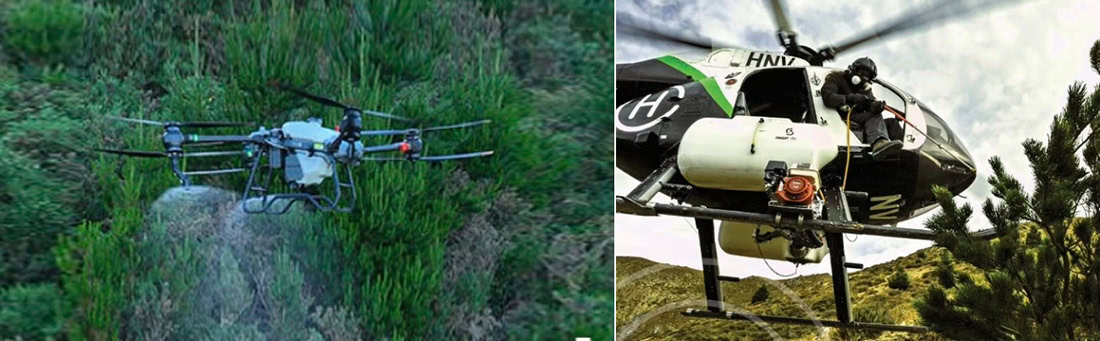
Eradication methods are currently either manual clearing or manned helicopter spraying.
UAV-based machine-vision controlled systems are presently under development and have been demonstrated, as being capable of fully automated flight-control, species selection and targeted spraying of invasive species.
The machine-vision and flight-control, aspects of this technology are already capable of practical rollout. However, due to the payload requirements, combined with the distances and scale involved, it is the range, endurance and load-carrying limitations of currently available UAV air-platform hardware that is the main barrier to the rollout of a commercially viable solution.
Fire-Fighting
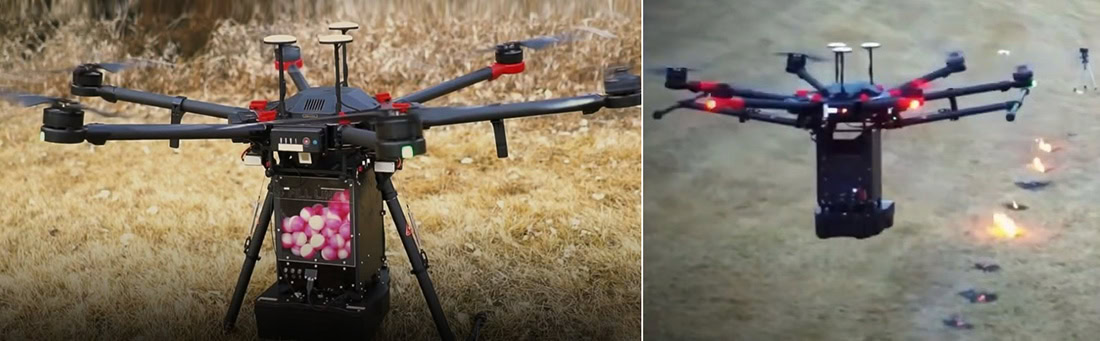
Backburning is a traditional method of controlling forest fires and outback wildfires. Aerial incendiary-dropping systems developed for use with manned helicopters have been in practical firefighting use for some years. Able to line-drop a series of chemical-filled balls that ignite once they hit the ground and establish a fire-line for the backburning containment of wildfires.
More recently, incendiary systems have been produced specifically for use with UAV platforms. Integrated with proprietary software specifically designed for wild-land firefighting. Planning and geofencing of ignition missions, along with the line-dropping establishment of fire lines is being accomplished with a high level of autonomy with existing multi-rotor-based, systems.
UAV application has the clear potential to seriously improve the safety, distribution and economics of automated firefighting systems. Considering the scale, inaccessibility and time constraints affecting most real-world forest fire situations, it is presently the lack of a practical, economic long-endurance VTOL air platform that is the key obstacle to a wider application of UAV firefighting technologies.
UAV based re-forestation systems
Traditional manual tree-planting methods are increasingly unable to keep up with global deforestation. UAV-based systems have been developed, able to spread or shoot specially prepared nutrient-rich seed balls evenly across a pre-mapped area. The seed-ball method has been tested and found to have a success rate for most target species and multi-species preparations.
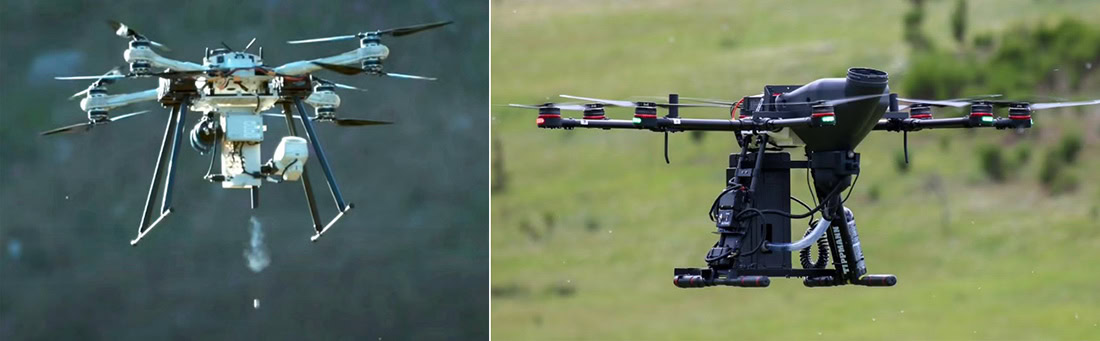
Using automation and digital intelligence, combined with software-based interactive platforms, these systems are becoming increasingly user-friendly. The versatility and automation potentials of UAV planting systems give them the potential for a wider and more economic application in global reforestation and commercial tree-planting efforts.
Worldwide, there are currently around one billion acres of land that could benefit from automated forest re-planting. Due to the scale and inaccessibility of most of the terrain involved, it is the range and endurance limitations of available UAV air platforms that are presently holding back the commercial roll-out of automated tree-planting technology.
UAV Delivery Systems
Considerable hype has been generated about novelty UAV applications such as pizza delivery. Since then, the real-world commercial uses of UAV delivery have settled out to predominantly high-value and time-critical applications such as medical delivery. We are convinced that we are presently witnessing only the very early stages of the ultimate potential of automated UAV delivery.
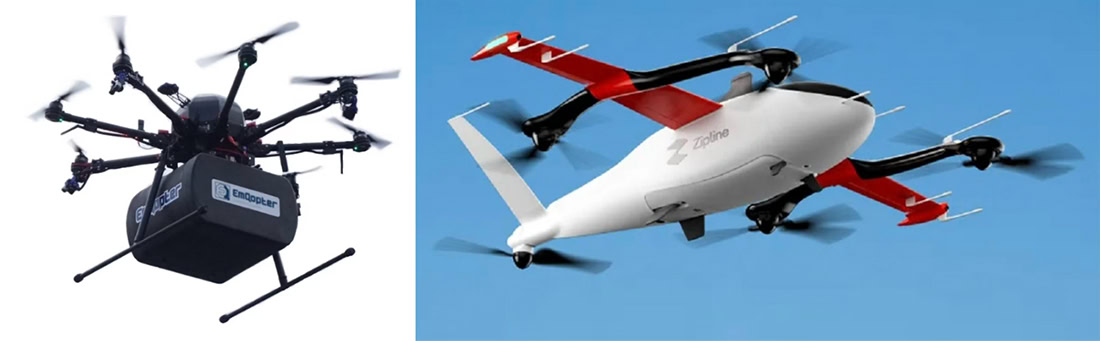
For VTOL delivery, two main air-platform types are currently employed in commercial operations.
1 – The versatility of the electric speed-control multi-rotor makes it the logical choice for shorter-range and urban applications. With a more compact planform and a shorter flight-cycle time, the basic multi-rotor is more economical and lends itself more easily to “drone in a box” types of automation.
2 – VTOL applications requiring greater ranges are presently for the most part employing longer-range winged-hybrid type UAV’s.
The Theyron system can combine the advantages of these two types to revolutionise the performance and economics of UAV delivery. Configurable to a fully electric variant with a higher useful load percentage combined with greater speed and speed-efficiency, our system has the potential to improve the payload ranges, flight-cycle times and footprint of present electric options.
For longer-range applications, our system can leverage energy-dense fuel types with improved economy and safety along with reduced noise and size compared to currently available options
Vehicle-Based Operation
The feasibility of automated UAV take-off and landing from a moving vehicle has been successfully demonstrated. “Last-mile” delivery, either for the final-destination delivery or en route resupply of the road vehicle, appears to be the logical initial application.
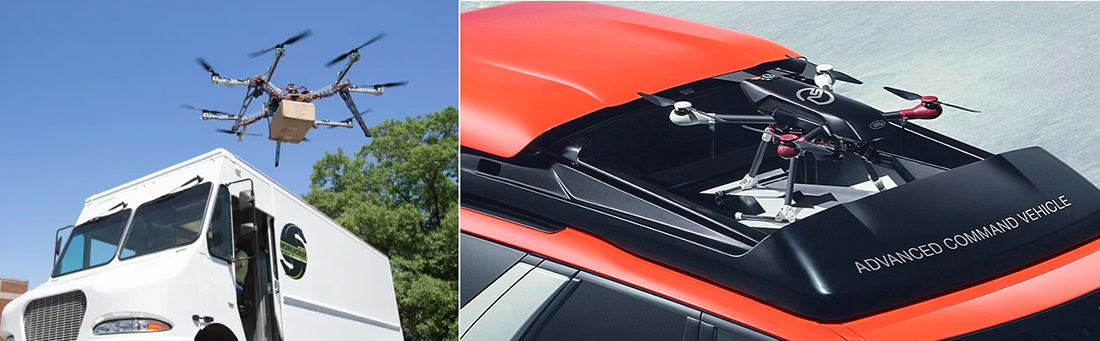
An electric variant of the Theyron system has the potential to extend the physical and economic potentials of vehicle-launched UAV systems. Higher useful load percentages and speed can result in improved flight-cycle times and payload ranges.
Utilising a narrow ducted-rotor configuration reduces the noise footprint and raises the maximum payload weight able to be operated directly from a road vehicle. Improving the potential overall daily payload rate of the road-vehicle / UAV combination.
Conclusions
The UAV Endurance Technology Gap And Emerging Applications
An increasing number of emerging UAV applications are aimed at leveraging machine vision and automated guidance technologies to perform physical and payload-carrying tasks. Developers are successfully demonstrating the technical feasibility of a wide number of sophisticated physical operations that must ultimately have large future commercial potentials.
Many of these emerging and near-future applications currently face the same two main obstacles to achieving the technical goals and the financial backing required for a successful commercial rollout.
1 – Payload-range and endurance
Presently, the single biggest obstacle facing the practical application of many payload-carrying UAV use-cases is the lack of a long-range / long-endurance air-platform capable of compact economic utility combined with a useful load-carrying capacity.
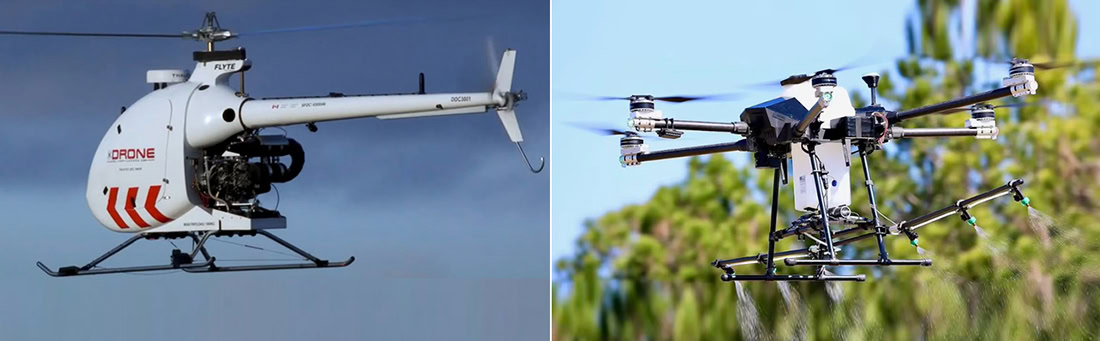
On the one hand, speed-controlled multi-rotor UAV’s, provide a simple economic utility of operation, but they are limited in their range and endurance performance.
On the other hand, helicopter-type UAV’s, are capable of impressive speed endurance, and load-carrying capacity, but their cost, footprint and technical operating complexities make them uneconomic for many applications.
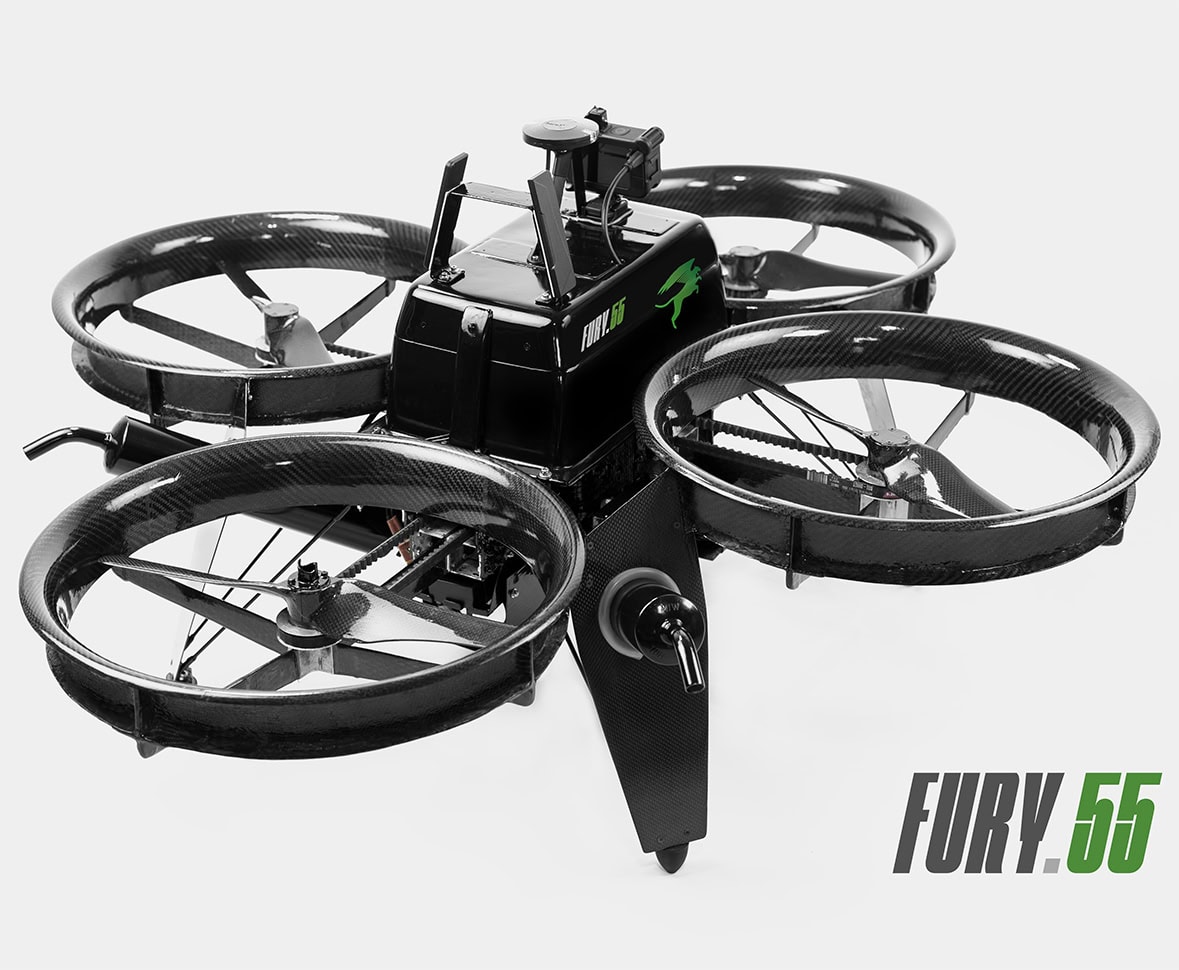
The Theyron operating system has been developed to bridge this gap. Able to be configured to either fully-electric or internal-combustion powerplant variants, our system gives a safe, compact, economical, operating utility while also providing high useful load percentages and a speed, range, and endurance performance comparable to that of the helicopter-type UAV.
2 – Security Of Intellectual Property
A second and less understood barrier facing many emerging UAV applications is the difficulty of achieving adequate IP security, particularly for niche areas of commercial development. Although many UAV developers are achieving remarkable results, most of this innovation is now based primarily on the underlying advances in machine-vision, and guidance technologies.
As a result, many emerging UAV developers are not well positioned to achieve the levels of machine-patent security necessary to control the copying or circumvention of their innovation once their initial development and proving work has been accomplished.
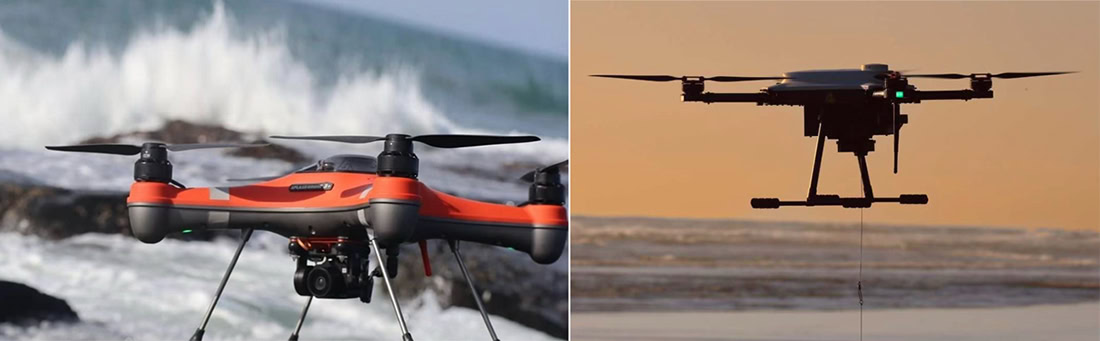
Illustrating this difficulty, was the development over the past ten years of sport fishing UAV’s. A large amount of the early product development and proving for this was accomplished by a single developer who ultimately produced the first commercially available fishing-specific UAV package.
The underlying technology for this development was of necessity based primarily on existing UAV and guidance technologies. As a result, the level of IP protection that the developer was able to achieve, subsequently proved able to be bypassed by new entrants to the UAV fishing space.
These entrants were able, not only to directly evaluate the developers’ commercial offerings and to simplify them but also to benefit from the level of market acceptance already now generated. As a result, the developer was bypassed commercially by the rapid rollout of quality, cheaper systems that also gained further advantages from the subsequent advances in the underlying technologies.
On a much larger scale, the emergence of agricultural UAV has seen a similar situation. Several multi-rotor developers performed much of the early proving work to bring agricultural spraying UAV’s to market. Subsequently, larger stakeholders have been able to enter and dominate the market. Able to leverage their advantages in applicable guidance technologies along with scale production.
Niche developers can be particularly vulnerable to the problems associated with inadequate IP security. Mostly smaller teams comprising of predominantly, hands-on engineers, focused on achieving a particular set of, often very exciting, innovation goals. IP weaknesses often initially surface only at the point where they begin to present obstacles to gaining the necessary further funding or investment required to progress the development project forward.
The technical and commercial realities of IP security tend to be better understood within innovation funding and investment channels. Government and private sources of funding and investment capital mostly comprise a good proportion of financial and business specialists.
These usually have considerable previous experience with innovative businesses, often including direct IP-related experience and know-how, along with trusted advisory contacts within patenting channels.
The ultimate commercial profitability of most new technology developments usually hinges on having an edge in the form of effective IP security. Funding and investment specialists will study this in greater detail during the later stages of business feasibility evaluation.
Lack of effective IP is often the underlying cause of a funding failure for an innovative technology startup. Later-stage equity-funding rounds invariably require a higher level of business plan scrutiny, so funding failures often occur downstream of several initial seed-funding successes.
To exacerbate this, IP deficiency is not always clearly identified as the primary cause. As a result, startups with otherwise very promising technology and sound business planning begin to encounter funding headwinds without realising that the underlying cause is uncertainty about the venture’s IP security.
The UAV Endurance Gap – Theyron’s Solution
Many existing and emerging UAV applications are faced with the same two obstacles.
1 – Many existing VTOL UAV applications would gain serious commercial and operational advantages from the availability of an economic UAV package with an improved utility, endurance and load-carrying capacity. Many emerging applications and developments will need to see advances in these areas before they can even hope to become technically or commercially viable.
2 – Many existing and emerging UAV applications are unable to achieve an effective level of direct IP security for their, particular area of innovation.
Theyron’s new flight operating system can be leveraged to overcome these two obstacles simultaneously and to provide serious enduring advantages to early adopters of our technology.
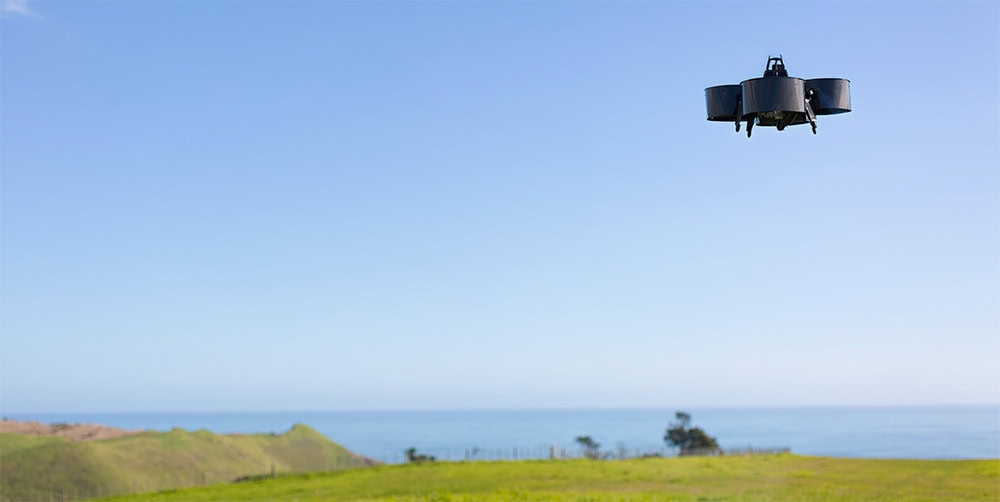

Improved Air-Platform Performance Combined With Secure IP.
For a new and disruptive technology to obtain real commercial success for the developer, a combination of two factors must be achieved. The new technology must be able to significantly improve the performance and economics of an existing or emerging use case. The developer must also have some form of IP leverage if they are to avoid being bypassed at later stages by new entrants or existing relevant industry stakeholders.
Our simplified airframe is the result of a completely new approach to solving the endurance and complexity limitations of available UAV technology. We have produced a compact, economic solution that can provide serious increases in range, speed and load-carrying capacity.
Our rotor control system is not just a derivative or improvement based on previously existing systems. Rather it is a completely new and innovative method of flight control. Due to the new and unique nature of our system, we have been able to achieve a high level of security for our underlying intellectual property. This puts us in a very good position to prevent or control the potential copying or circumvention of our technology going forward.

Collaborative Opportunities
Our development efforts have been focused exclusively on improving the performance and economics of available UAV flight hardware. As a result, our core expertise relates primarily to the design and low-volume production of our underlying air-platform technology combined with machine-patenting and IP strategy planning for the same.
To achieve a commercial rollout of our technology, we are presently seeking to enter strategic user collaborations with existing and emerging UAV stakeholders and developers. These can gain serious economic and performance advantages from applying our air platform hardware to their specific UAV applications and areas of technological know-how.

Early adopters of our system
Early adopters can gain enduring advantages based on our secure underlying intellectual property. We plan to negotiate strategic franchise agreements with early adopters, effectively allowing them the ability to leverage our IP to gain and control technology-based performance advantages in their fields of operation.
This could be in the form of an ongoing region-specific / use-case-specific franchise agreement for the exclusive use of, or development based on our air-platform technology.
Explore how our innovative rotor control system can transform your UAV operations.
Inquire:
* Required Fields.
Before contacting us via the portal, please ensure that you have thoroughly read the material presented on our website.